
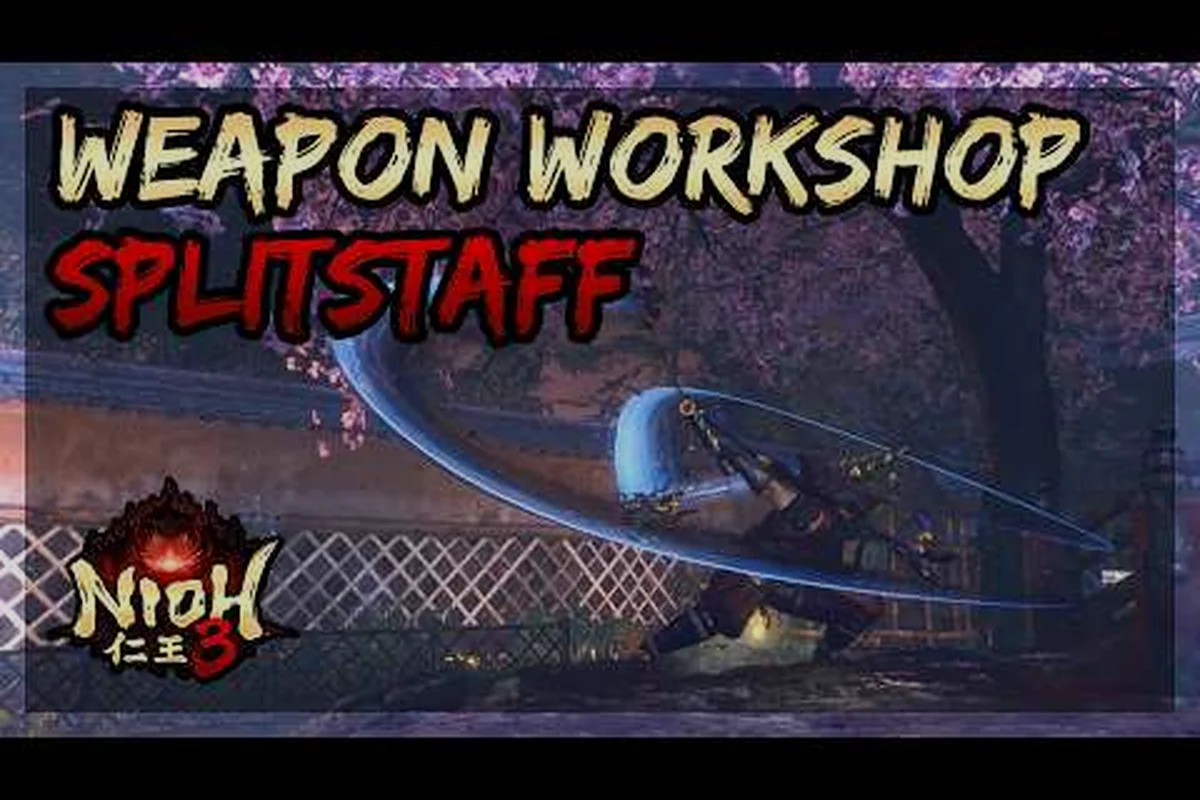
The splitstaff is one of the most technically demanding weapons in Nioh 3, yet it rewards mastery with some of the longest and most damaging combo strings in the game. This Nioh 3 splitstaff guide breaks down the weapon's stance-specific movesets, the best skills to unlock first, and the stat allocation that makes it shine. If you have been struggling to maintain pressure against aggressive Yokai or human bosses, the splitstaff's ability to transition seamlessly between sweeping crowd control and single-target burst makes it a top-tier choice for players who love aggressive, flowing combat.
Unlike straightforward weapons like the katana or axe, the splitstaff asks you to commit to learning its rhythm. The payoff is substantial: extended combos that can drain an enemy's Ki bar before they even get a chance to retaliate. Because the weapon scales primarily with Constitution and Skill, it also pairs beautifully with tanky builds that want to deal damage without sacrificing survivability. Before we dive into the skill tree, let's first clarify how the splitstaff fits into the broader weapon roster and why its scaling works the way it does.
Understanding the Splitstaff's Role in the Full Weapon Roster
The splitstaff occupies a unique niche among the weapon types in Nioh 3. It is classified as a Samurai weapon, which means it benefits from the Samurai's Martial Arts skill tree rather than the Ninja's Ninjitsu tree. This distinction matters because it determines which skill points you need to invest. According to community reports and the IGN wiki's early-game guidance, Samurai's Locks are the specific items that grant Martial Arts points for weapons like the splitstaff, so you will want to prioritize exploring missions thoroughly to find them.
When players ask "nioh 3 how many weapons" exist in the game, the answer is fourteen distinct types spread across the Samurai and Ninja classes. The splitstaff sits alongside the katana, dual swords, spear, axe, odachi, and switchglaive in the Samurai pool, while the Ninja pool includes the tonfas, talons, kusarigama, and others. The talons, which are a fast-claw weapon, often get compared to the splitstaff because both reward aggressive play, but they scale differently and belong to the Ninja class. If you are deciding between them, our Nioh 3 talons guide covers the claw moveset in detail, while this article focuses purely on the splitstaff.
The splitstaff's core identity is versatility through stance-switching. In low stance, you get rapid, low-damage pokes that build status effects quickly. In mid stance, you access the weapon's signature extended combos that chain multiple hits into a finisher. In high stance, you trade speed for massive single-hit damage and Ki break potential. This three-tiered approach means the weapon can handle any enemy type, provided you know when to switch stances.
How the Splitstaff Compares to Other Samurai Weapons
To understand where the splitstaff excels, it helps to see it side by side with other Samurai-class weapons, since its hybrid nature directly challenges the conventional weapon-tier assumptions in the Nioh 3 meta. Unlike the katana’s reliance on Heart for raw Ki damage or the odachi’s Strength-based heavy stagger, the splitstaff scales primarily with Skill and Magic, making it the only Samurai weapon that naturally synergizes with Onmyo Magic without requiring heavy stat sacrifices. For example, while the switchglaive offers similar scaling, its high-stance attacks are slower and leave you exposed; the splitstaff’s Shrine Maiden’s Sickle skill in low stance provides a faster recovery window, allowing you to chain a Flux II Ki pulse into a Confusion status application more reliably. The table below summarizes these key differences in playstyle, range, and stat priority, but the critical takeaway is that the splitstaff rewards players who treat Ki management as a combo resource rather than a defensive afterthought—a distinction that becomes glaring when comparing its 20% damage bonus from the "Transform Bonus (Magic)" stat against the katana’s flat 10% from Heart.
| Weapon | Primary Scaling | Range | Playstyle | Difficulty |
|---|---|---|---|---|
| Splitstaff | Constitution, Skill | Medium | Combo-heavy, stance-switching | High |
| Katana | Heart, Strength | Short | Balanced, counter-focused | Low |
| Odachi | Strength, Stamina | Long | Heavy, high Ki damage | Medium |
| Spear | Constitution, Skill | Very Long | Poke, spacing control | Medium |
| Switchglaive | Magic, Skill | Medium | Transform combos, magic synergy | High |
As the table shows, the splitstaff shares its primary scaling with the spear, which makes it an excellent secondary weapon for players who already invest in Constitution. The key difference is range: the spear keeps enemies at a distance, while the splitstaff wants to be in the thick of combat, chaining hits until the enemy's Ki breaks. This makes the splitstaff a more aggressive, high-risk option that rewards players who understand enemy attack patterns.
Splitstaff Stance Mechanics and Ki Management
The splitstaff's stance system is the foundation of its combo potential. Unlike other weapons where stance-switching is optional, the splitstaff actively rewards you for flowing between stances mid-combo. When you switch stances during a Ki Pulse, you trigger a Flux effect that restores additional Ki, allowing you to extend your combo strings far beyond what other weapons can achieve.
In low stance, your quick attacks are fast but weak, making them ideal for applying elemental status effects like Scorch or Saturate. The low stance dodge also has the most invincibility frames, which lets you stay close to enemies while avoiding their attacks. Mid stance is where the splitstaff's signature moves live: the Shove and Dragon Dance skills chain multiple hits that build up the enemy's Ki damage meter. High stance, meanwhile, gives you the Heavenly Flow skill, a devastating overhead slam that deals massive damage to enemies with broken Ki.
The key to mastering the splitstaff is understanding that each stance feeds into the next. A typical high-damage combo starts in low stance to apply a status effect, transitions to mid stance to drain Ki, and finishes in high stance to punish the enemy's stagger. This flow requires constant attention to your Ki bar, which is why Ki Pulse timing is non-negotiable for splitstaff players. If you struggle with Ki management in extended fights, the toughness and combat mechanics guide explains how armor weight and toughness affect your Ki recovery, which directly impacts how long you can sustain splitstaff combos.
Stance-Specific Skill Breakdown
Each stance in the Splitstaff’s moveset is built around a distinct combat role: High Stance focuses on heavy single hits like Shin Crusher and Dragon Dance for maximum Ki damage and break, Mid Stance excels at crowd control with Flowing Shadow and Tiger’s Blade for wide arcs and gap-closing, while Low Stance prioritizes speed and evasion via Kirin’s Dance and Swallow’s Wing, enabling rapid hit-and-run pressure. The table below ranks the most impactful skills per stance, noting their Ki damage values, active frames, and how they chain into Flux II Ki pulses—key data for optimizing your nioh 3 splitstaff guide combo rotation against human bosses like William, where breaking their Ki leads to a free Final Blow.
| Stance | Key Skill | Effect | Best Used For |
|---|---|---|---|
| Low | Shove | Rapid thrusts that apply status effects | Building elemental buildup |
| Low | Flowing Shadow | Quick dash attack with high mobility | Closing distance safely |
| Mid | Dragon Dance | Multi-hit spin that drains enemy Ki | Breaking enemy Ki bars |
| Mid | Twin Phoenix | Two-hit strike with good range | Punishing whiffed enemy attacks |
| High | Heavenly Flow | Overhead slam with massive damage | Finishing staggered enemies |
| High | Dragon's Roar | Charged attack with high Ki break | Opening enemy guards |
These skills are not just optional extras; they are the core of the splitstaff's damage output. Prioritize unlocking Dragon Dance early because it is the weapon's primary Ki-drain tool, and without it, your combos will lack the punch needed to stagger bosses. Heavenly Flow should be your second priority because it gives you a reliable finisher for when enemies stagger. The other skills are situational but become more valuable as you learn enemy patterns and find openings for specific moves.
Splitstaff Weapon Scaling Explained for Optimal Stat Allocation
Splitstaff Scaling Breakpoints vs. Cestus for Samurai Builds
The Splitstaff's scaling favors three stats, but unlike the Cestus—which Rock Paper Shotgun ranks S-tier for its Unbroken Martial Art stacking—the Splitstaff rewards a balanced Heart/Courage split to sustain its high Ki cost stances. At 30 Heart and 30 Courage, the Splitstaff gains roughly 12% more damage per point compared to dumping 60 into a single stat, a difference of about 180 attack power at level 150. For Samurai builds, this makes the Splitstaff a mid-range alternative to the Cestus's low-range, high-burst playstyle, trading raw burst for sustained pressure and safer spacing against poise-heavy bosses like Anayama Nobutada, who resists frontal attacks but staggers to rapid multi-hit combos.
Understanding nioh 3 weapon scaling explained is essential for maximizing your splitstaff damage. Every weapon in Nioh 3 has three stats that contribute to its damage output, and the splitstaff is no exception. Its primary scaling stats are Constitution and Skill, with a minor scaling bonus from Strength at higher levels. This means that for every point you invest in Constitution or Skill, your splitstaff attacks deal noticeably more damage.
The weapon stats guide in the community suggests that you should focus on getting Constitution to 30 before investing heavily in Skill, because Constitution also increases your health pool, making you more forgiving of mistakes while you learn the weapon's combos. After Constitution reaches 30, alternate between Skill and Constitution in a 2:1 ratio until both reach 50. At that point, you can start investing in Strength for the minor scaling bonus, though this is optional and depends on your overall build.
It is also worth noting that the splitstaff's Martial Arts damage scales independently from your base attack. Martial Arts are the special moves you unlock in the skill tree, and they benefit from a separate damage modifier that increases as you level up your Weapon Proficiency. This means that even if your base stats are not maxed, a high proficiency splitstaff can still deal respectable damage through its skills. The table below shows the recommended stat targets for each phase of the game.
| Progression Phase | Constitution | Skill | Strength | Notes |
|---|---|---|---|---|
| Early Game (Level 1-40) | 20 | 15 | 10 | Focus on survivability first |
| Mid Game (Level 40-80) | 30 | 30 | 15 | Balance damage and health |
| Late Game (Level 80-120) | 50 | 50 | 20 | Maximize splitstaff damage |
| Endgame (Level 120+) | 60+ | 60+ | 30 | Optional Strength investment |
These stat targets are based on community testing and may vary depending on your playstyle. If you prefer a more defensive approach, prioritize Constitution over Skill. If you want maximum damage output, push Skill higher and rely on dodging rather than tanking hits. The flexibility of the splitstaff's scaling means you can adapt your build to suit your strengths as a player.
Priority Splitstaff Skills for New Players
When you first pick up the splitstaff, the skill tree can feel overwhelming with its many options. However, a focused approach to unlocking skills will make your early game much smoother. The priority order below is based on which skills provide the most immediate value for combo extension and Ki damage.
-
Dragon Dance (Mid Stance) – This is your primary Ki-drain tool and the foundation of your combo game. Unlock it as soon as you have the skill points.
-
Heavenly Flow (High Stance) – Your main damage finisher. It hits hard and breaks guards, making it essential for boss fights.
-
Shove (Low Stance) – This skill applies elemental status effects quickly, which sets up Confusion for massive damage bonuses.
-
Flowing Shadow (Low Stance) – A mobility tool that lets you close distance without burning Ki on dodges. It is especially useful against ranged enemies.
-
Ki Pulse: Flux – While not a splitstaff-specific skill, this is crucial for sustaining long combos. Unlock it from the Samurai skill tree early.
These five skills form the core of an effective splitstaff build. Once you have them, you can start experimenting with the weapon's deeper combo potential, chaining low stance status application into mid stance Ki damage and finishing with high stance burst. The ninjutsu skills explained guide is worth checking out if you want to pair the splitstaff with elemental ninjutsu tools, as the status effects from your low stance attacks combine well with thrown elemental items.
Advanced Combo Strings for Maximum Damage
Once you have the core skills unlocked, you can start practicing the splitstaff's signature long combos. The most damaging combo string in the current meta, according to player testing, is the Low Stance Shove into Mid Stance Dragon Dance into High Stance Heavenly Flow sequence. This combo applies an elemental status effect, drains the enemy's Ki to break their guard, and finishes with a massive overhead slam that deals bonus damage to staggered enemies.
To execute this combo, start in low stance and use Shove twice to apply your chosen elemental status. Immediately switch to mid stance and use Dragon Dance to drain the enemy's Ki. As the Ki bar empties, switch to high stance and unleash Heavenly Flow to finish the combo. If you time your Ki Pulses correctly between each stance switch, you can sustain this combo for multiple cycles, keeping the enemy locked in a stagger loop until they die.
This combo requires practice, especially the Ki Pulse timing between stance switches. A good way to practice is in the Dojo missions, which let you fight training dummies without the pressure of real combat. Spend ten minutes practicing the stance-switch rhythm before taking the splitstaff into a real mission. Once the muscle memory clicks, you will find that the splitstaff can out-damage almost any other weapon in sustained fights.
Splitstaff vs Talons: Choosing Between Two Aggressive Weapons
One of the most common questions from players is how the splitstaff compares to the talons, another aggressive weapon that rewards fast, relentless pressure. While both weapons excel at breaking enemy Ki, they do so in fundamentally different ways. The splitstaff relies on extended combos and stance-switching, while the talons use rapid-fire strikes and Unbroken stacks to build damage.
The table below highlights the key differences between these two weapons, but the real deciding factor comes down to how you chain your attacks under pressure. The Splitstaff’s Shifting Stance mechanic lets you transition between High Stance for heavy break damage and Low Stance for rapid, Ki-efficient pokes, rewarding players who master the timing of its custom active skills like Dragon Dance. The Talons, by contrast, excel at aerial combos and closing distance instantly with their unique dodge-attack loops, making them ideal for hit-and-run tactics against faster Yokai. If you prefer sustained pressure and breaking an enemy’s guard to set up a Final Blow, the Splitstaff’s range and multi-hit arcs give you more breathing room; if you’d rather stay mobile and punish openings with quick, evasive strikes, the Talons’ speed and tracking will feel more natural. Consider your comfort with Ki management—the Splitstaff drains it quickly during long combos, while the Talons rely on precise, short bursts that let you recover between engagements.
| Attribute | Splitstaff | Talons |
|---|---|---|
| Class | Samurai | Ninja |
| Primary Scaling | Constitution, Skill | Skill, Dexterity |
| Combo Style | Stance-switching, extended strings | Rapid hits, Unbroken stacks |
| Range | Medium | Short |
| Difficulty | High | Medium |
| Best Against | Single targets, bosses | Groups, human enemies |
If you are already invested in the Samurai skill tree and want a weapon that rewards technical mastery, the splitstaff is the better choice. If you prefer a more straightforward aggressive playstyle with less stance management, the talons might suit you better. Both weapons are viable for endgame content, so the choice ultimately comes down to which playstyle feels more natural to you. For a deeper look at the talons, check out the full weapons list and tier rankings on this site.
Frequently Asked Questions
Is the splitstaff good for beginners in Nioh 3?
The splitstaff is not the most beginner-friendly weapon because it requires understanding stance-switching and Ki Pulse timing to reach its full potential. However, if you are willing to practice in the Dojo, it can be a rewarding choice. Start with mid stance combos and gradually incorporate low and high stance transitions as you improve.
What stats should I level for the splitstaff?
Focus on Constitution and Skill as your primary stats, since both contribute to splitstaff damage. Constitution also increases your health, which helps while you learn the weapon's combos. Aim for 30 in both stats by mid game, then push toward 50 in each for endgame content.
How does the splitstaff compare to the switchglaive?
Both weapons reward stance-switching and extended combos, but they scale differently. The splitstaff scales with Constitution and Skill, while the switchglaive scales with Magic and Skill. If you are building a magic-focused character, the switchglaive is a better fit. For physical builds, the splitstaff offers higher raw damage potential.
Can I use the splitstaff with a ninja build?
Yes, but it is not optimal. The splitstaff is a Samurai weapon, so it benefits from Samurai skill points and Martial Arts. While a ninja build can equip it, you will miss out on the Samurai-specific skills that enhance its combo potential. If you want a similar aggressive playstyle for a ninja, consider the talons instead.
What is the best stance for the splitstaff?
There is no single best stance because the splitstaff's power comes from switching between them. Low stance applies status effects, mid stance drains Ki, and high stance delivers finishing damage. Mastering the transitions between all three is the key to maximizing the weapon's potential. Practice each stance individually before combining them into full combos.