
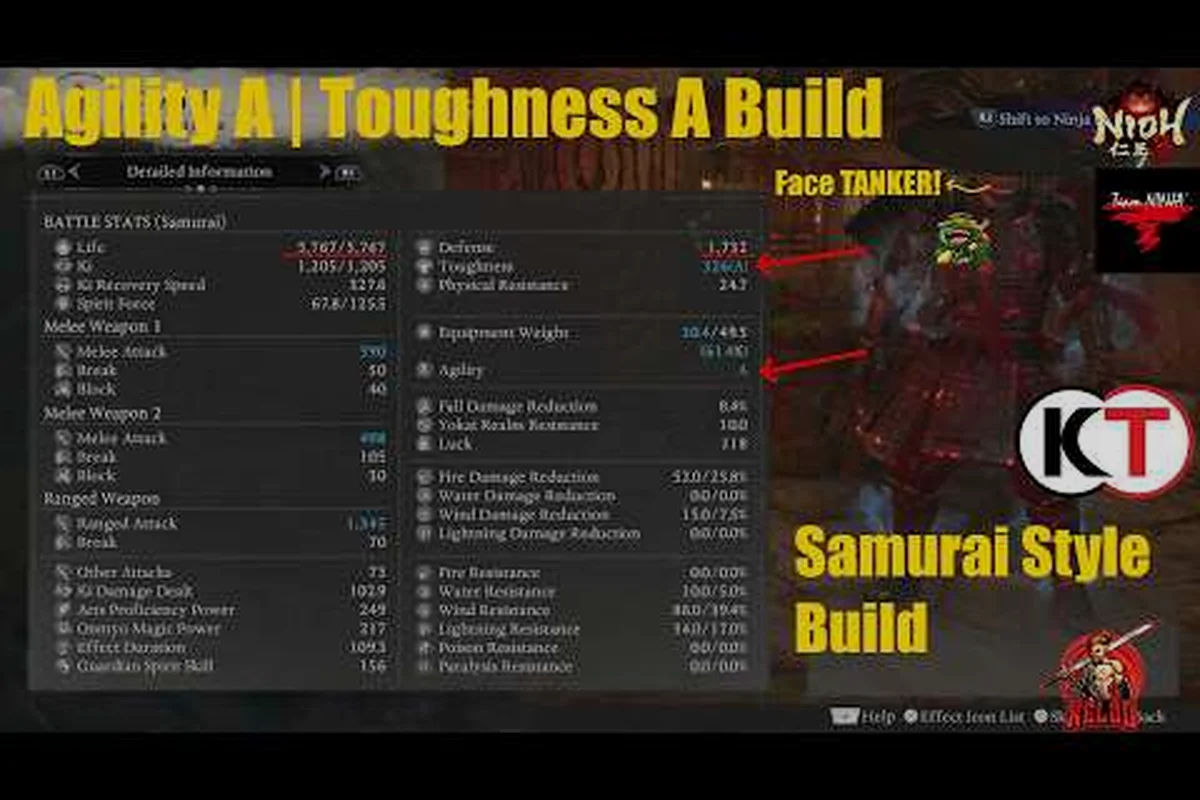
Nioh 3 toughness explained simply: toughness is the stat that governs poise, hyper armor, and stagger resistance during combat. If you have ever been interrupted mid-swing by a yokai's claw or knocked out of a Martial Art by a random arrow, low toughness is the culprit. This stat determines whether you can trade hits with enemies and keep your offense flowing, which makes it one of the most important defensive layers for aggressive playstyles.
Toughness matters because Nioh 3's combat rewards commitment. When you commit to a heavy attack or a Martial Art, you are vulnerable during the wind-up and recovery frames. High toughness lets you absorb incoming hits without flinching, so you can finish your combo and stagger the enemy instead. Players who ignore toughness often find themselves stuck in a defensive loop, constantly blocking and dodging instead of applying pressure. Raising toughness transforms your approach from reactive to proactive, and it pairs naturally with heavy armor sets and weapons that benefit from trading blows.
Understanding the Toughness Stat and How It Works
Toughness in Nioh 3 is a numerical value derived primarily from your armor pieces, with additional contributions from set bonuses, guardian spirits, and certain passive skills. The game calculates your total toughness by summing the toughness values of each equipped armor piece, then applying percentage modifiers from skills and set effects. This total determines your poise threshold, which is the amount of incoming damage or hit-stun you can ignore before your character flinches.
The core mechanic works through a simple rule: when an enemy attack connects with you, the game checks your toughness against the attack's stagger power. If your toughness exceeds the stagger power, you resist the flinch and can continue your action. If it does not, you get interrupted. This is why heavy armor users can walk through attacks that would stop a light armor user cold. The system rewards investment, but it also has diminishing returns, so understanding the breakpoints matters more than blindly stacking the stat.
Toughness Breakpoints and What They Mean
Community testing has identified several key toughness breakpoints that change how your character behaves in combat. These thresholds are not officially documented in-game, but players have verified them through extensive testing across different armor sets and enemy types. The table below summarizes the most important breakpoints reported by the community:
| Toughness Range | Behavior | Best For |
|---|---|---|
| 0–100 | Minimal poise; most attacks interrupt you | Light armor dodge-focused builds |
| 100–200 | Resists weak attacks; medium attacks still stagger | Hybrid builds with mixed armor |
| 200–300 | Resists most standard enemy attacks | Heavy armor trading builds |
| 300+ | Hyper armor on most Martial Arts; resists boss combos | Endgame tank and trade setups |
Reaching the 200–300 range is the sweet spot for most players because it allows you to trade with standard enemies without getting locked down. The 300+ range is where hyper armor becomes reliable on Martial Arts, letting you power through boss attacks that would normally interrupt you. However, hitting 300+ requires heavy armor investment, which affects your agility rating and dodge distance, so you need to balance toughness against mobility.
How Toughness Interacts with Agility and Weight
Toughness and agility are linked through your equipment weight, and this relationship shapes your build decisions. Heavier armor provides more toughness but reduces your agility rating, which slows your dodge and increases ki consumption. Lighter armor keeps you agile but leaves you vulnerable to stagger. The trade-off is central to build planning, and players who want high toughness must accept the mobility cost.
The table below breaks down the agility tiers and their exact combat trade-offs, so you can see precisely what you sacrifice when stacking toughness for hyper-armor. Loading up on heavy chest armor and accessories pushes you toward Agility C (above 30.0 equipment weight), which drops your dodge invincibility frames and ki pulse recovery speed—both critical for maintaining pressure in endgame missions like the Depths. Meanwhile, staying at Agility A keeps your mobility crisp but forces you to cap toughness around 200, leaving you vulnerable to stagger-lock against human bosses with fast combos.
| Agility Rating | Dodge Distance | Ki Consumption | Recommended Toughness |
|---|---|---|---|
| A (under 30% weight) | Longest | Lowest | 100–150 via skills |
| B (30–70% weight) | Medium | Medium | 150–250 via mixed armor |
| C (70–100% weight) | Short | High | 250–350 via heavy armor |
For players who want to maintain agility while still getting decent poise, the B agility tier is the practical sweet spot because it allows medium armor sets that provide 150–250 toughness without crippling your dodge. If you want the full tank experience, C agility with heavy armor gives you the highest toughness but requires you to rely on blocking and hyper armor rather than dodging. Understanding this trade-off is essential before you commit to a toughness-focused build.
How Toughness Affects Weapon Scaling and Combat Flow
Toughness does not directly change your damage output, but it dramatically affects how effectively you can use your weapon's moveset. When you have high toughness, you can commit to slower, heavier attacks without fear of interruption, which means you can actually land the full damage of your weapon scaling combat potential. Weapons that scale with Strength or Constitution often have slower animations, and these weapons benefit the most from toughness investment.
The relationship between toughness and weapon choice is practical: fast weapons like Dual Swords and Cestus rely on quick strikes and dodging, so they need less toughness. Slow weapons like Axes, Odachi, and Splitstaff have long wind-ups that leave you exposed, so they demand higher toughness to function properly. If you are using a heavy weapon without enough toughness, you will constantly get interrupted mid-swing, wasting your ki and leaving you open to counterattacks.
Best Weapon Types for High Toughness Builds
Certain weapon types synergize exceptionally well with high toughness because their movesets are designed around trading hits rather than dodging. Odachi and Axe stand out here; their heavy attacks carry innate hyper-armor that keeps your stance locked even when absorbing blows, letting you punish enemies mid-swing without flinching. This pairs directly with the Toughness stat's poise threshold—once you cross roughly 200 Toughness, most Yokai light attacks and humanoid kicks won't interrupt your charged attacks, turning trades into a favorable damage race. The table below ranks the best weapon types for toughness-focused builds based on community reports and combat testing, highlighting which movesets maximize this trade-heavy playstyle:
| Weapon Type | Toughness Synergy | Why It Works |
|---|---|---|
| Axe | Excellent | Slow, high-damage swings that need poise to land |
| Odachi | Excellent | Long reach with heavy attacks that benefit from hyper armor |
| Splitstaff | Very Good | Extended combos that require commitment |
| Tonfa | Good | Fast but benefits from poise on Martial Arts |
| Dual Swords | Moderate | Quick strikes; toughness helps but not essential |
The Axe and Odachi are the top choices for toughness builds because their entire playstyle revolves around landing heavy hits. If you prefer a more technical weapon, the Splitstaff guide covers how extended combos interact with poise and ki management. The Splitstaff's long attack chains are much safer when you have enough toughness to resist interruptions, making it a strong alternative for players who want both reach and aggression.
Martial Arts and Hyper Armor Frames
Martial Arts are special moves that consume ki and often have built-in hyper armor frames, which are periods during the animation where you cannot be staggered. The amount of hyper armor you get depends on your toughness, and higher toughness extends these frames or makes them more reliable. This is why toughness builds can use Martial Arts aggressively while low-toughness builds must time them carefully.
For example, the Odachi's Moonlit Snow and the Axe's Raging Strike both have hyper armor, but they only work reliably when your toughness is above 200. Below that threshold, a single enemy hit can cancel the move, wasting your ki and leaving you vulnerable. Players who want to use these high-commitment Martial Arts should prioritize toughness in their armor choices and consider the weapon requirements guide to understand which skills provide additional poise bonuses.
Elemental Damage and Status Effects in Toughness Builds
Elemental damage is a separate layer of combat that interacts with toughness builds in important ways. When you apply elemental damage to enemies, you build up elemental status effects that debuff them or deal bonus damage over time. These effects are crucial for breaking enemy ki and setting up devastating combos, and they work especially well with toughness builds because you can stay aggressive while the status effects tick.
The elemental system in Nioh 3 includes Fire, Water, Lightning, Wind, and Earth, each with unique status effects. Fire causes burning damage over time, Water increases damage taken, Lightning slows enemy movement and attack speed, Wind reduces enemy defense, and Earth increases ki damage. Understanding these effects is essential for optimizing your damage output, and the table below summarizes each element's status effect:
| Element | Status Effect | Best Used Against |
|---|---|---|
| Fire | Burning damage over time | Yokai with high HP |
| Water | Increases damage taken | Bosses with large health pools |
| Lightning | Slows enemy movement and attacks | Fast enemies and human bosses |
| Wind | Reduces enemy defense | Armored enemies |
| Earth | Increases ki damage | Enemies with high ki |
The Confusion Status and How to Trigger It
The confusion status is one of the most powerful mechanics in Nioh 3, and it occurs when you apply two different elemental status effects to the same enemy simultaneously. When confusion triggers, the enemy takes increased damage, has reduced ki recovery, and becomes vulnerable to stagger, which synergizes perfectly with toughness builds. A confused enemy cannot fight back effectively, so your high poise lets you maintain relentless pressure.
To trigger confusion, you need to apply two elemental status effects before the first one expires. This requires either two different elemental weapons, elemental talismans, or a combination of both. According to the Game8 build tier list, Onmyo Magic and Ninjutsu are often used alongside elemental damage to apply status effects quickly, making them excellent complements to toughness builds. The confusion status is particularly effective against bosses because it locks them into a staggered state, giving you extended windows to deal damage.
Lightning Status and Its Synergy with Toughness
The lightning status deserves special attention because it slows enemy movement and attack speed, which creates a powerful synergy with toughness builds. When an enemy is slowed by lightning, their attacks become easier to read and dodge, and your high toughness means you can trade hits even if you make a mistake. This combination makes lightning one of the best elements for aggressive players who want to maintain pressure without taking excessive damage.
Lightning is especially effective against human bosses and fast yokai, as noted in the Eurogamer boss list which highlights enemies that switch between elemental attacks. By applying lightning to slow them down, you reduce their threat level significantly. The lightning status also pairs well with confusion, since it is one of the easiest elements to apply consistently through talismans or imbued weapons.
Building a Toughness-Focused Character
Building a toughness-focused character requires careful planning across armor, stats, and guardian spirits. The goal is to reach the 200–300 toughness range while maintaining enough agility to stay effective in combat. This section provides a step-by-step approach to building a character that can trade hits and dominate with elemental damage.
The first step is choosing your armor weight class. Heavy armor provides the most toughness but reduces agility, while medium armor offers a balanced approach. For most players, a mix of medium and heavy pieces that keeps you in B agility is the best starting point. This gives you 200+ toughness without sacrificing too much mobility, and it leaves room for set bonuses that add elemental damage or status effect accumulation.
Recommended Stats and Armor Sets
Your stat allocation directly shapes your toughness build because Strength and Stamina raise your equipment weight capacity, letting you equip heavier armor like the Obsidian Samurai set without crossing the 70% Agility threshold that slows ki regeneration and increases ki pulse recovery time. Constitution simultaneously provides a passive HP bonus that improves survivability when trading blows, while Spirit contributes to your Guardian Spirit's toughness-related bonuses. The table below breaks down each relevant stat, its weight capacity contribution, and the passive defense or ki benefits it grants for a balanced toughness setup:
| Stat | Contribution | Priority |
|---|---|---|
| Stamina | Increases equipment weight capacity | High |
| Strength | Increases damage with heavy weapons | High |
| Constitution | Increases HP and some weapon scaling | Medium |
| Magic | Improves Onmyo Magic and elemental talismans | Medium |
| Skill | Improves Ninjutsu and some weapon scaling | Low |
Stamina is the most important stat for toughness builds because it determines how much heavy armor you can wear while staying in a reasonable agility tier. Strength and Constitution are secondary priorities depending on your weapon choice. Magic is valuable if you want to use elemental talismans to apply status effects, which pairs well with the confusion status strategy. For a deeper dive into stat allocation, the build stats explained guide covers the full breakdown of how each stat affects your build.
Guardian Spirits and Set Bonuses
Guardian spirits provide passive bonuses that can significantly boost your toughness and elemental damage. Some spirits grant bonus toughness, while others enhance status effect accumulation or reduce ki consumption. Choosing the right spirit depends on your playstyle, but spirits that boost toughness or elemental damage are generally the best for this build type.
Set bonuses from armor sets also contribute to toughness and elemental effectiveness. For example, the Grace of Fukurokuju set, as detailed in the Fextralife build guide, enhances status effect duration and sustain, which is ideal for elemental builds. Combining a guardian spirit that boosts toughness with an armor set that enhances elemental status effects creates a powerful synergy that lets you apply confusion reliably while staying aggressive.
Advanced Toughness Strategies for Endgame Combat
Once you have a solid toughness build, you can employ advanced strategies that take advantage of your poise and elemental damage. These strategies are designed for endgame content where enemies hit hard and have high stagger power, so you need to maximize every advantage.
The most effective advanced strategy is trading with purpose. Instead of dodging every attack, you intentionally absorb hits that you know your toughness can resist, then punish the enemy during their recovery frames. This requires knowing which attacks you can tank and which ones will break your poise, so you need to learn enemy movesets thoroughly. The hyper armor from high toughness makes this strategy viable, but it also requires good ki management to avoid running out of stamina mid-combo.
Ki Management and Flux Techniques
Ki management is critical for toughness builds because trading hits consumes ki quickly. The Flux technique, which involves switching stances during a Ki Pulse to recover additional ki, is essential for maintaining pressure. By combining Flux with high toughness, you can keep attacking relentlessly while recovering ki, which is the core loop of an aggressive toughness build.
Players who master Flux can chain together extended combos that would be impossible with low toughness, because they can absorb hits without losing momentum. This technique is covered in detail in the combat guide, which explains how stance switching and Ki Pulse mechanics work together. The combination of high toughness and skilled ki management is what separates average toughness builds from truly dominant ones.
Countering Enemies with High Stagger Power
Some enemies, particularly bosses and large yokai, have attacks with stagger power that exceeds your toughness even at 300+. Against these enemies, you cannot rely on poise alone, so you need to adapt your strategy. The key is to identify which attacks have unblockable stagger and which ones you can safely trade with.
For enemies with high stagger power, focus on applying elemental status effects to slow them down or reduce their defense. The lightning status is particularly effective here because it reduces their attack speed, giving you more time to react and dodge. Once you apply confusion, their stagger resistance drops, making them vulnerable to your high poise. This layered approach—using toughness for standard enemies and elemental status for bosses—is the most effective way to handle endgame content.
Frequently Asked Questions
What is the difference between toughness and poise in Nioh 3?
Toughness is the stat value that determines your poise, which is your resistance to being staggered. Higher toughness means you can absorb more hits without flinching, while poise is the actual mechanic that governs stagger resistance. In practice, they refer to the same system, with toughness being the numerical representation.
How much toughness do I need for a heavy weapon build?
For heavy weapons like Axe and Odachi, you should aim for at least 200 toughness to reliably trade hits. The 250–300 range is ideal for endgame content because it provides hyper armor on most Martial Arts. Below 200, you will get interrupted frequently, which wastes ki and leaves you vulnerable.
Does toughness affect elemental damage or status effects?
Toughness does not directly affect elemental damage, but it enables you to stay aggressive while applying status effects. Because high toughness lets you trade hits without flinching, you can maintain pressure and build up elemental status effects more consistently. This synergy makes toughness builds excellent for triggering the confusion status.
Can I use lightning status with a toughness build?
Yes, lightning status is highly effective with toughness builds because it slows enemy attacks, giving you more time to react. The slowed enemies are easier to trade with, and your high poise lets you absorb hits while applying lightning. This combination is particularly strong against fast human bosses.
Is toughness worth it for fast weapon builds?
Toughness is less critical for fast weapons like Dual Swords and Cestus, which rely on dodging and quick strikes. However, a moderate toughness of 100–150 can still help you resist weak attacks and maintain combos. If you want to use Martial Arts with fast weapons, investing in some toughness is worthwhile.